Our story

Decathlon’s story is one of constant movement.

A story that reinvents itself every day, on every pitch, court and trail.

A story powered by one clear idea: to innovate and make sport ever more accessible.

A story driven by the energy of our teams, dedicated to serving our customers and everyone who uses our products.

founders of Decathlon

1976: The spark in Englos (Northern France)

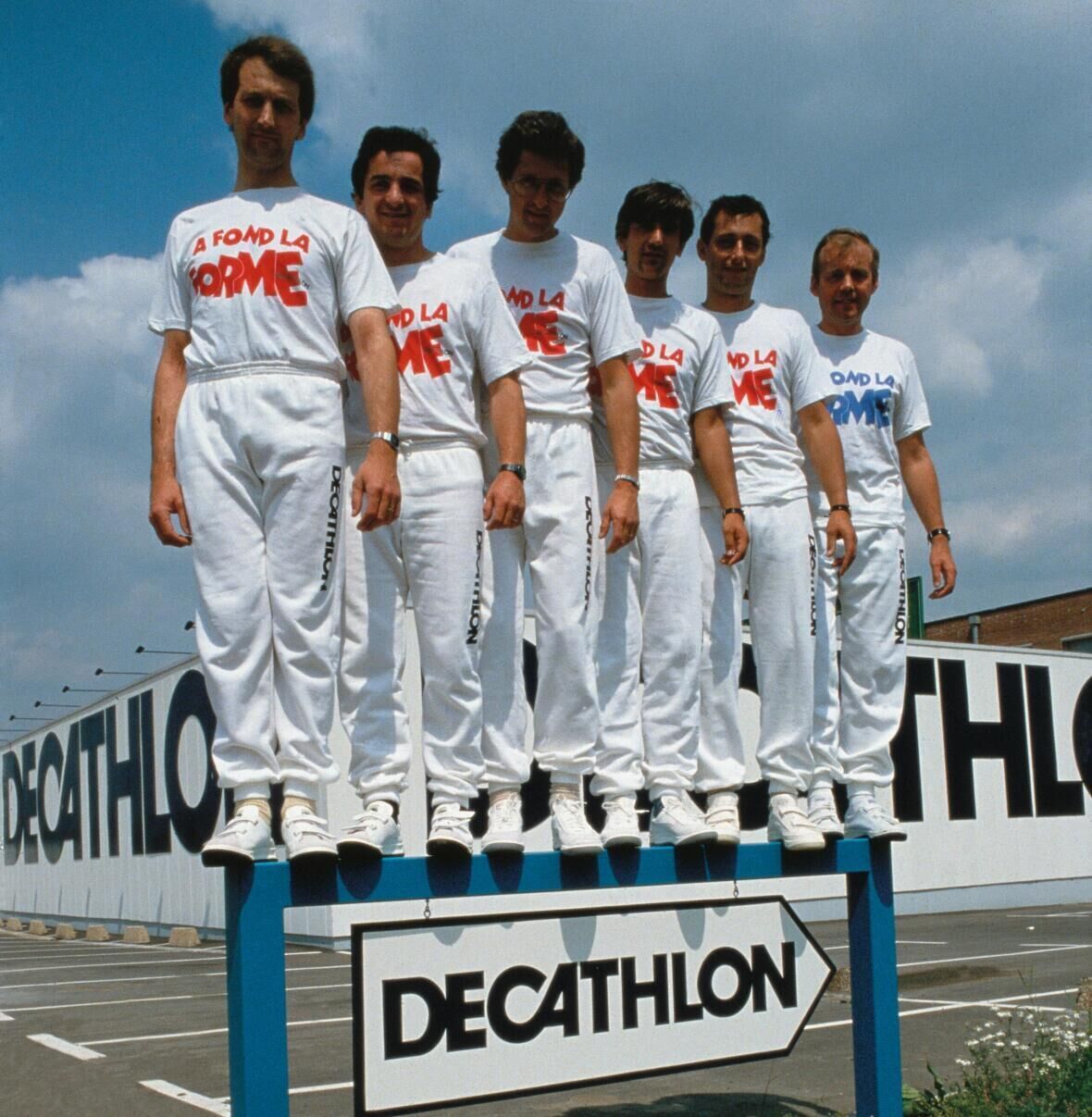
It all began in Englos, near Lille, in Northern France. Michel Leclercq came up with a new idea: a large, self-service sports store. To bring his idea to life, he brought together a team of six enthusiasts: Stéphane Delesalle, Benoît Poizat, Stanislas Ernoult, Didier Decramer, Nicolas Dubrulle and Hervé Valentin. Together, they took on the challenge of bringing all sports under one roof, at the best price.


The name 'Decathlon' was chosen to embody our multi-sport ambition. Right from the start, the store’s offering exceeded its Greek root, deka, by covering much more than ten sports. 'Decathlon' became the symbol of our mission: to bring all sports under one roof and make them accessible to everyone.

From left to right on the picture: Stéphane Delesalle, Benoît Poizat, Stanislas Ernoult, Didier Decramer, Hervé Valentin, Michel Leclercq (founder), (Nicolas Dubrulle is absent).
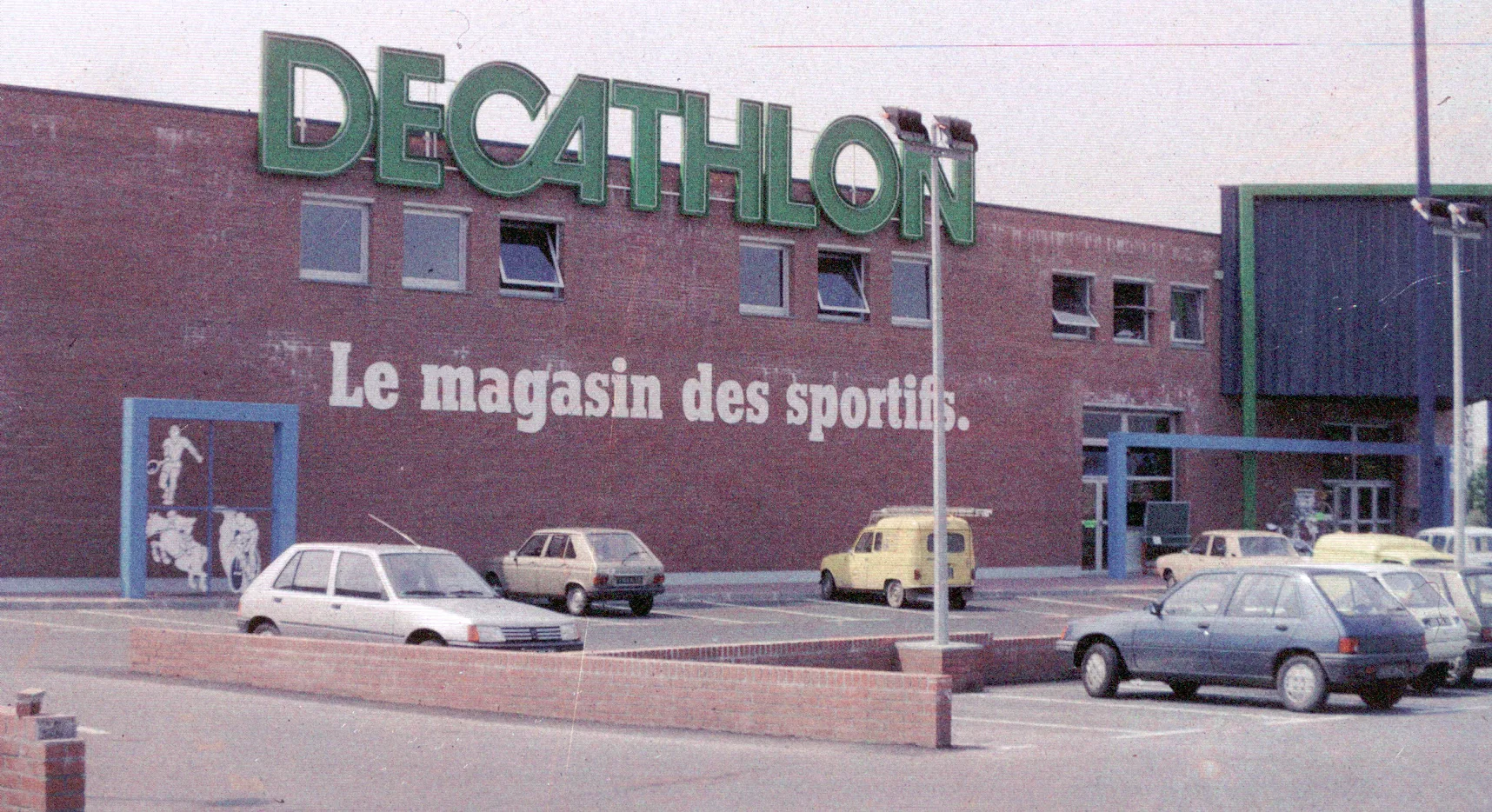
The 1980s: from constraint to innovation – becoming a manufacturer

Sometimes, constraints turn into catalysts. Supply issues with major bike brands could have slowed everything down. Instead, the Decathlon team saw an opportunity. They turned to local manufacturers and started building their own product ranges. That decision changed everything. It marked the beginning of Decathlon’s industrial journey – and the moment we became a manufacturer. That same spirit of independence would later shape our identity as both designer and manufacturer.


In the 1980s, a promise appeared on every team member’s badge: “Satisfied athletes are my job.” More than a slogan, it was a commitment. A unique company culture began to grow – built on trust, responsibility and a shared passion for sport. In 1985, the École des Métiers was created to support that growth through shared knowledge. (It became Decathlon University in 2023.) 


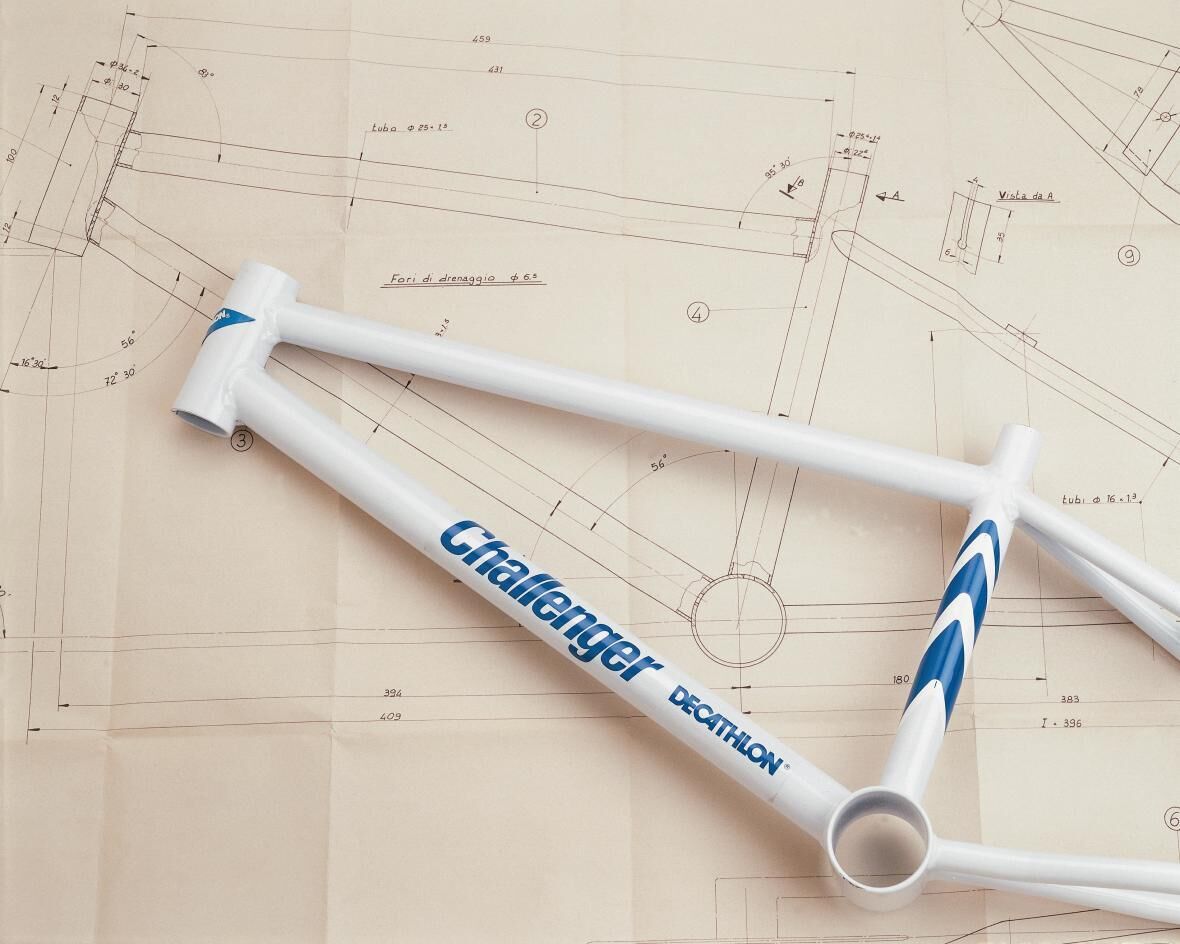
In 1986, with 31 stores to its name, Decathlon reached a major milestone: launching  Decathlon production. The “Challenger” bike frame, designed in-house, became the symbol of this new activity.

1986-90: scaling up – people and production

1986: This year saw the opening of our first store in Germany.

In 1987in France, our journey became even more collective with the launch of employee share ownership, allowing every team member to become a co-owner of the company.

Starting in 1989, our production offices expanded internationally to gain better control over quality at every step—beginning in Thailand, followed by South Korea, Taiwan, Spain, and Italy in 1990.

The 1990s: the drive to make products “mââgic”*

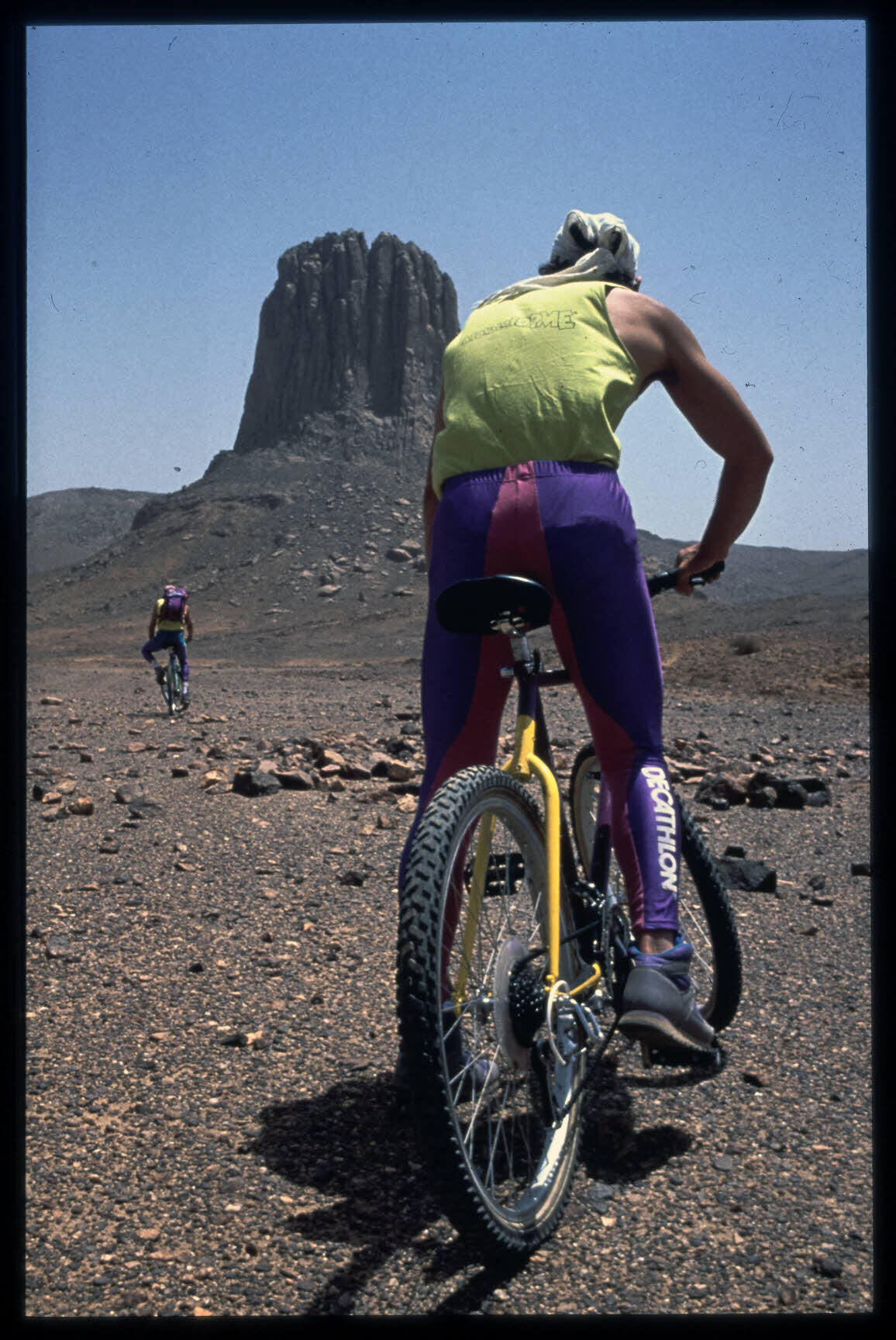
For Decathlon, the product has to be smart, innovative – and above all, “mââgic,” as our early adverts put it. Nothing is left to chance: every innovation is tested in real conditions during “test missions.”

In the 1990s, distribution expanded across Europe after its German start. The meteoric rise in Spain in 1992 kick-started global growth.

At the same time, technical expertise was reaching new heights. In 1997, a Research & Development centre dedicated to the human body was launched in Lille, laying the foundations for science-driven innovation focused on comfort, performance and safety.

*“mââgic” was THE way to communicate about the release of new products.

The birth of Passion Brands

In 1996 and 1997, Decathlon launched its first “Passion Brands”: Tribord for water sports and Quechua for the mountains – marking a real internal shift.

In a bid to get closer to its users, the Quechua teams began moving into the Alps from 1997 onwards. Domyos, Inesis and Kipsta for fitness, golf and football followed suit, building centres of expertise that strengthened their credibility among ever more demanding sports enthusiasts.

The 2000s: Decathlon goes global

The new millennium took Decathlon to new continents, starting with Brazil in 2001 and China in 2003. The company diversified, opened up to franchising in 2005, and launched its charitable Foundation to support those most in need. In 2006, e-commerce was introduced, marking the start of a profound digital shift.

Environmental awareness also grew stronger. Sustainability efforts were put in place, with increasing commitments to dramatically reduce environmental impact.

The 2010s

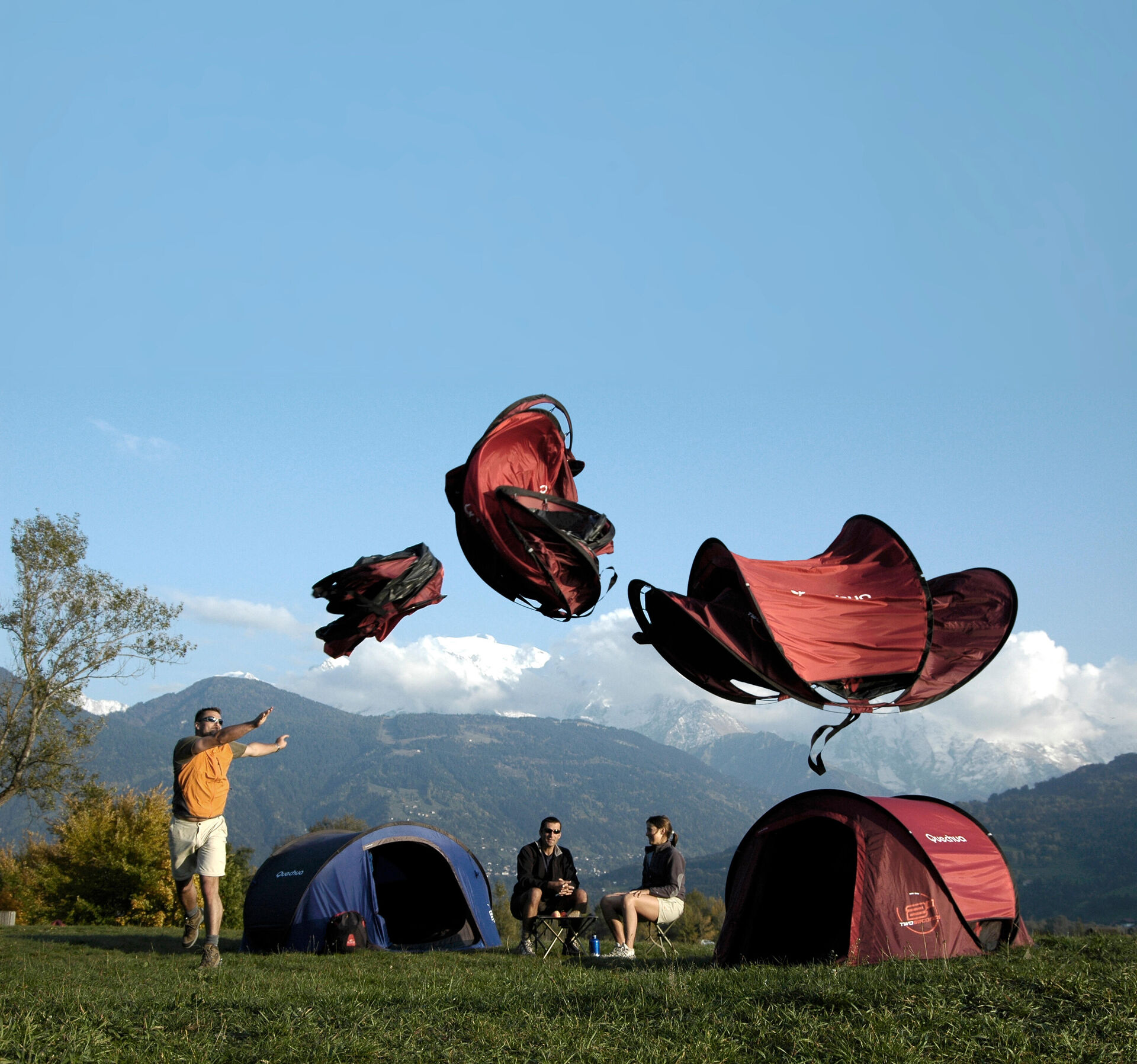
Throughout the decade, our focus was on removing the barriers between people and sport. Rather than chasing pure performance, we created solutions that make sport more enjoyable and more comfortable. Some of our key innovations, like the Easybreath mask and the 2 Seconds Tent have become iconic worldwide.This drive to make life easier is built into every detail of our products, making them more intuitive and closer to users’ real needs. We also strengthened our commitments to sustainability: eco-design became a priority, marking the start of a deeper transformation.

Decathlon continued to grow, expanding into more than 40 new countries, territories and regions of distribution between 2010 and 2020.

The 2020s: a new strategic chapter

After reaching 100,000 teammates and navigating the COVID-19 pandemic – which accelerated digital transformation – Decathlon entered a new phase. In 2024, a new brand identity was unveiled, and the portfolio of Passion Brands was streamlined to 13 brands for greater clarity and impact.

As an official partner of the Paris 2024 Olympic and Paralympic Games, Decathlon celebrated sport on the greatest sporting stage of all. The company also stepped up its strategic partnerships and launched Decathlon PULSE, a subsidiary dedicated to exploring new business frontiers and investing in innovations to shape the future of sport.

Playing as a team: the power of our partnerships

At Decathlon, we’re convinced that to truly innovate, you need to be right where the action happens. That’s why, since the early 2000s, we’ve treated partnerships as much more than just contracts: they are a real co-design adventure.

Today, in 2026, we work with over 300 partners worldwide, from global athletes to more local initiatives. But for us, being a partner isn’t just about putting a logo on a jersey. It’s about bringing world-class athletes—like Antoine Griezmann or the riders of the Decathlon CMA CGM team—straight into the heart of our creation process.

Our partners test, challenge, and push our gear to the limit in the heat of competition. Our mission? To turn that high-level expertise into a win for every sportsperson. What we build with champions finds its way into our stores, making professional performance accessible to everyone.

In 2026, Decathlon celebrates its 50th anniversary

This milestone is more than a celebration of our past – it’s a springboard to what comes next.

It also marks a key step in our decarbonisation journey. By 2026, we aim to reduce our CO₂ emissions by 20% in absolute terms compared with 2021. To get there, we’re focusing on ecodesign and developing circular solutions that extend the life of our products – through repair, rental and resale – while investing in leading companies such as Bike Leasing (2026) and Rebike (2026).

Fully aware of the impact of our activities, we keep moving forward with a strong focus on wellbeing – while working every day to reduce our footprint on the playground we all share.


On the side of logistics and transport network, we manage shipping, customs clearance and distribution through a network of 72 warehouses (figures as of 31 dec. 2025), ensuring products move smoothly from factory to front door.

One shared goal drives us: making our products accessible while delivering the best possible customer experience.

Our next move?

By 2035, Decathlon aims to positively impact over two billion people, reaching 10% market share.


Our ambition starts with our teammates and reaches far beyond our customers and users. It embraces our partners across industries and services, the communities we serve and global society as a whole.


Reinforcing our foundations, we will open the game, with a more holistic vision of sport and wellbeing. We will accompany every person through their journey with products, services and experiences designed to nurture physical, mental, emotional, and social health.


All of this serves our Vision: to Bring people together through sport to make wellbeing accessible for all.