Human Rights

At Decathlon, people are at the heart of everything we do. Guided by our values of vitality, generosity, responsibility and authenticity, we work to build a safe, respectful environment for our employees and everyone involved in making our products. To pursue our vision of positively impacting 2 billion people worldwide by 2035, we will continue our work on strengthening integrity in our supply chain and enhancing worker wellbeing.

  • 554 Tier 1 & Tier N suppliers with financial flows underwent social audits

    in 2025
  • 93.7% of Tier 1 and Tier N suppliers rated A, B or C2*

    with financial flows

*Audits evaluate suppliers through visual, documentary, and interview-based investigations to assign a performance score from A (Excellence) to E (Unacceptable). Scores below B mandate a corrective action plan.

Upholding Human Rights

Wherever Decathlon is present, we commit to respecting the Universal Declaration of Human Rights. The creation of our Human Rights Policy was informed by the principles found in the Declaration on Fundamental Principles and Rights at Work of the International Labour Organisation (ILO), the United Nations Guiding Principles on Business and Human Rights, and the Organisation for Economic Co-operation and Development (OECD) Principles for Responsible Business Conduct and local legislation.

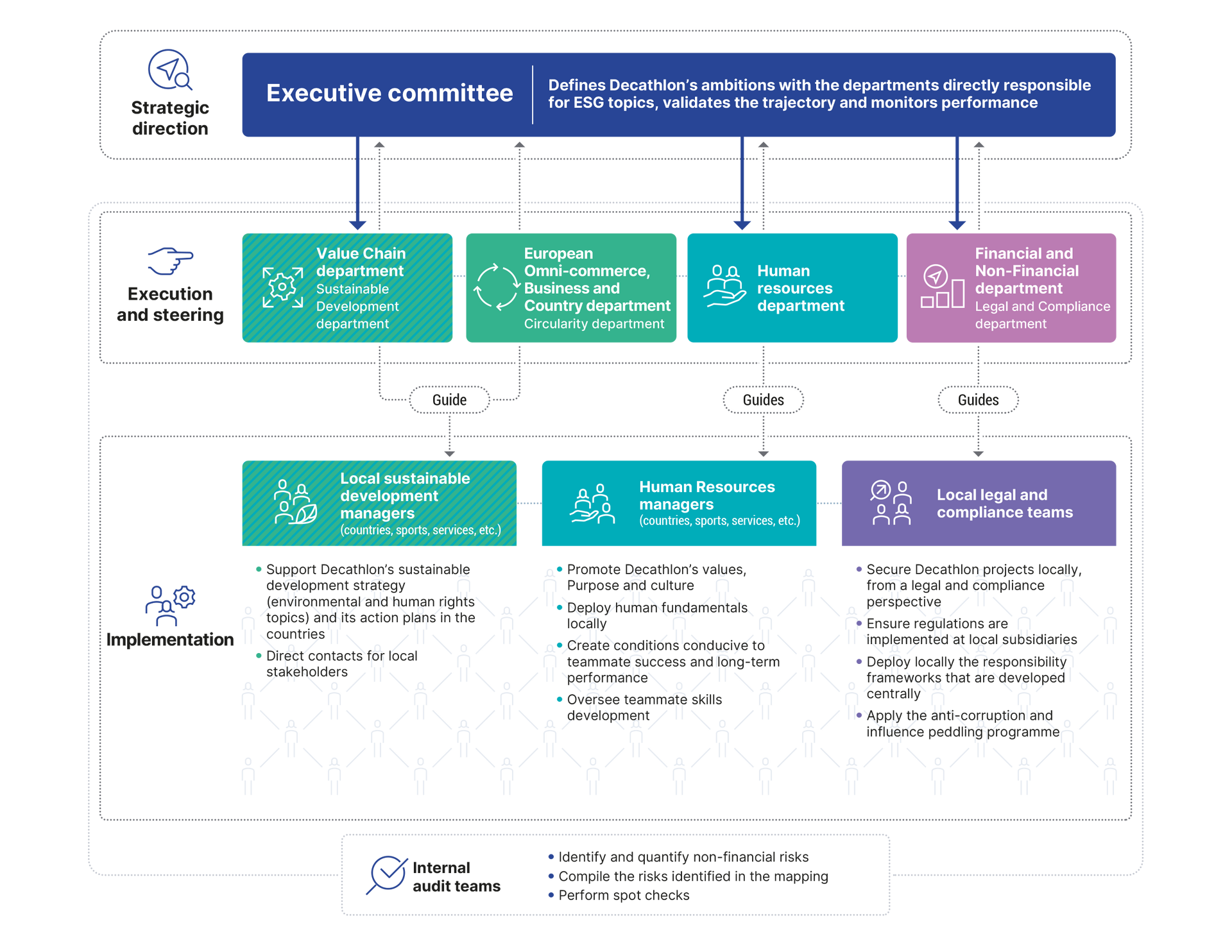
Our Human Rights Policy outlines clear expectations for both our team members and our business partners throughout all aspects of our operations. Developed with contributions from employees, supply chain workers, and Human Rights specialists, this policy is overseen by our Executive Committee to ensure we remain accountable to our commitments.

Supplier code of conduct

In addition to our Human Rights Policy, our Supplier Code of Conduct puts procedures in place to verify the protection of Human Rights in production. Our Tier 1 suppliers and Tier N suppliers with financial flows referenced with us are contractually required to follow our Supplier Code of Conduct, ensuring fair, safe and ethical treatment of workers. This includes mandates on fair pay and reasonable hours, while strictly prohibiting forced labour, child labour, and discrimination.

Furthermore, we have a range of supplementary policies and standards that guide our practices and promote ethical behaviour across the organisation:

Social audits

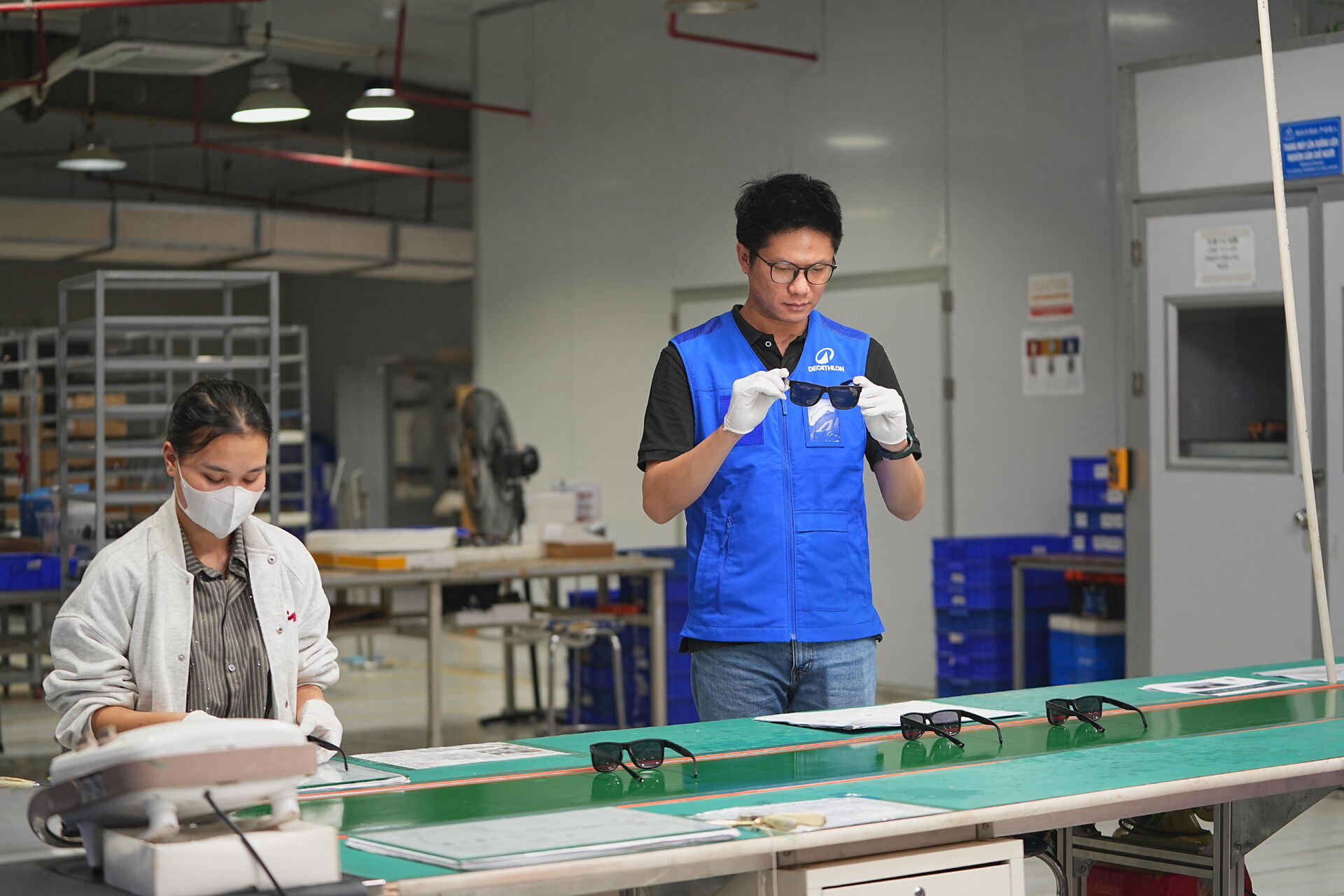
With over 1,200 suppliers in 45 territories, our work is supported by 2,100 production employees on the ground. They monitor adherence to our Code of Conduct through regular social audits, with standards that may be stricter than local regulations to ensure our human rights expectations are met. While we are proud of our progress, we recognise that protecting human rights is an ongoing journey that requires constant vigilance and collaboration.


Preventing child labour

Our Supplier Code of Conduct requires that no children be present on the manufacturing site. We are committed to refusing or ceasing to work with subcontractors who do not comply with this principle.

The path to a decent living wage

To manufacture our innovative and accessible sports products, we rely on the expertise of workers from around the world. Closing the global living wage gap is a systemic challenge that no single company can solve alone. While we still have much to learn, we completed an evaluation of pay gaps across 95 partner sites with the support of our production staff and external experts in 2025.

Worker engagement and satisfaction

In 2021, we began measuring worker satisfaction and engagement based on the Engagement and Wellbeing (EWB) survey. As well as our Human Rights Policy, this tool aims to empower suppliers to promote decent and safe working conditions and to more effectively measure, prevent, and respond to sexual harassment.

  • 154K Workers

    responded to the Engagement and Wellbeing Survey, with 202 sites participating

Governance